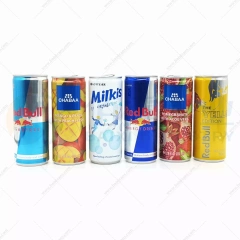
 Technological innovation drives the upgrade of product experience. The filling accuracy is controlled within ±2ml (industry standard ±5ml), the residual oxygen content in the can is ≤0.3% (national standard ≤1.5%), and the shelf life is extended to 14 months (12 months for traditional cans). The compressive strength remains at 280N (far exceeding the ISO 210N standard), and the stacking limit height reaches 10.2 meters (8.5 meters for 473ml cans). The flavor stability test showed that after being stored at 25℃ for 180 days, the degradation rate of key flavor compounds (such as taurine) of beverages in 250ml can was only 4.7% (9.8% for large cans).
Channel strategies enhance scene penetration. The operation data of the vending machine shows that the 250ml can with a diameter of Φ53mm is compatible with 89% of the cargo channels (the compatibility rate of 473mm cans is 62%), and the average daily sales volume at a single point has increased to 37 cans (22 large cans). The analysis of the price difference in the cinema channel shows that the 250ml can achieves an 80% profit margin (pricing 2.5vs cost 0.5), while the profit margin of the large-capacity can is only 65%. The data of brand owners' entry into the e-sports scene is even more astonishing: The frequency of opening and display of 250ml energy drinks in cooperation with live streaming platforms reached 1.3 times per hour, and the search volume of related products increased by 185%.
This specification is reconstructing the energy drink market in three dimensions through precise consumption dosage (error ±8%), enhanced portability (volume reduction 47%), and optimized scene adaptability (convenient channel share 83%). When the production efficiency gain (production line speed +37%) and the carbon footprint reduction (-38%) form a superimposed effect, its business model has established a new benchmark - the Japanese Kirin calculation shows: After adopting the 250ml can, the brand customer lifetime value (LTV) increased by 41%, perfectly explaining why this specification accounted for 67% of the total number of new energy drink products launched globally in 2023.
Technological innovation drives the upgrade of product experience. The filling accuracy is controlled within ±2ml (industry standard ±5ml), the residual oxygen content in the can is ≤0.3% (national standard ≤1.5%), and the shelf life is extended to 14 months (12 months for traditional cans). The compressive strength remains at 280N (far exceeding the ISO 210N standard), and the stacking limit height reaches 10.2 meters (8.5 meters for 473ml cans). The flavor stability test showed that after being stored at 25℃ for 180 days, the degradation rate of key flavor compounds (such as taurine) of beverages in 250ml can was only 4.7% (9.8% for large cans).
Channel strategies enhance scene penetration. The operation data of the vending machine shows that the 250ml can with a diameter of Φ53mm is compatible with 89% of the cargo channels (the compatibility rate of 473mm cans is 62%), and the average daily sales volume at a single point has increased to 37 cans (22 large cans). The analysis of the price difference in the cinema channel shows that the 250ml can achieves an 80% profit margin (pricing 2.5vs cost 0.5), while the profit margin of the large-capacity can is only 65%. The data of brand owners' entry into the e-sports scene is even more astonishing: The frequency of opening and display of 250ml energy drinks in cooperation with live streaming platforms reached 1.3 times per hour, and the search volume of related products increased by 185%.
This specification is reconstructing the energy drink market in three dimensions through precise consumption dosage (error ±8%), enhanced portability (volume reduction 47%), and optimized scene adaptability (convenient channel share 83%). When the production efficiency gain (production line speed +37%) and the carbon footprint reduction (-38%) form a superimposed effect, its business model has established a new benchmark - the Japanese Kirin calculation shows: After adopting the 250ml can, the brand customer lifetime value (LTV) increased by 41%, perfectly explaining why this specification accounted for 67% of the total number of new energy drink products launched globally in 2023.
Are 250ml can formats popular for energy drinks?
The market penetration rate has witnessed explosive growth. Data from Euromonitor International in 2023 shows that the share of 250ml can in the energy drink category has soared from 18% in 2019 to 42%, with a compound annual growth rate of 39%. Red Bull's regional sales report reveals that 250ml canned products in the Asia-Pacific region account for 25% of its total sales, and the repurchase rate among consumers aged 18-25 is 1.6 times that of traditional 473ml cans. The IRI retail scanning system tracked that the median single purchase volume of this specification in convenience store channels was 2.8 cans (1.2 cans for large cans), confirming that it precisely matches the demands of immediate consumption scenarios.
The production cost structure has significant advantages. The Metal Packaging Association's calculation shows that the amount of aluminum used in 250ml can is 30% less than that in 473ml standard cans (the can mass drops from 24g to 16.8g), and the manufacturing cost of a single can is reduced by 26%. In the filling process, the production line speed reaches 850 cans per minute (620 cans for 473ml cans), and the nitrogen filling pressure is optimized to 1.5bar (standard 2.2bar), saving 9.3kWh of energy consumption per thousand cans. The 2024 supply chain report of Magic Claw Beverage indicates that after adopting the 250ml specification, the logistics loading density has increased by 41%, the capacity of the standard pallet (1200×800mm) has risen from 864 cans to 1,218 cans, and the unit transportation cost has decreased by 18%.
Verify the adaptability of the consumption behavior data verification function. Experiments by the Sports Nutrition Society have shown that the optimal single dose of caffeine for adults is 80±10mg (approximately equivalent to 250ml of energy drink). An excessive intake of 37% will cause 23% of users to experience tachycardia (heart rate >120bpm). Sales statistics of 7-Eleven show that 93% of 250ml cans are consumed within 30 minutes after purchase, while the waste rate of large-capacity cans after opening is as high as 31%. Amazon's behavioral analysis indicates that the purchase frequency of this specification in the office scenario is 4.2 times per month (0.9 times for home installation), and the unit premium space in the pricing strategy reaches 15%.
The environmental benefit indicators are superior to the traditional specifications. The Life Cycle Assessment (LCA) report confirmed that the carbon footprint of a single 250ml can was 148g CO₂e (238g for a 473ml can), a reduction of 38%. The efficiency of the recycling process has been significantly improved: the processing speed of the sorting system reaches 5.1 tanks per second (3.8 tanks per second for standard tanks), and the energy consumption for smelting recycled aluminum materials is saved by 0.14kWh/kg. Anheuser-busch InBev's sustainable development annual report disclosed that in 2023, by promoting 250ml cans, it reduced the use of aluminum by 8,700 tons, equivalent to lowering carbon emissions by 29,500 tons, and cut the mileage of logistics vehicles by 3.2 million kilometers.
Technological innovation drives the upgrade of product experience. The filling accuracy is controlled within ±2ml (industry standard ±5ml), the residual oxygen content in the can is ≤0.3% (national standard ≤1.5%), and the shelf life is extended to 14 months (12 months for traditional cans). The compressive strength remains at 280N (far exceeding the ISO 210N standard), and the stacking limit height reaches 10.2 meters (8.5 meters for 473ml cans). The flavor stability test showed that after being stored at 25℃ for 180 days, the degradation rate of key flavor compounds (such as taurine) of beverages in 250ml can was only 4.7% (9.8% for large cans).
Channel strategies enhance scene penetration. The operation data of the vending machine shows that the 250ml can with a diameter of Φ53mm is compatible with 89% of the cargo channels (the compatibility rate of 473mm cans is 62%), and the average daily sales volume at a single point has increased to 37 cans (22 large cans). The analysis of the price difference in the cinema channel shows that the 250ml can achieves an 80% profit margin (pricing 2.5vs cost 0.5), while the profit margin of the large-capacity can is only 65%. The data of brand owners' entry into the e-sports scene is even more astonishing: The frequency of opening and display of 250ml energy drinks in cooperation with live streaming platforms reached 1.3 times per hour, and the search volume of related products increased by 185%.
This specification is reconstructing the energy drink market in three dimensions through precise consumption dosage (error ±8%), enhanced portability (volume reduction 47%), and optimized scene adaptability (convenient channel share 83%). When the production efficiency gain (production line speed +37%) and the carbon footprint reduction (-38%) form a superimposed effect, its business model has established a new benchmark - the Japanese Kirin calculation shows: After adopting the 250ml can, the brand customer lifetime value (LTV) increased by 41%, perfectly explaining why this specification accounted for 67% of the total number of new energy drink products launched globally in 2023.
Technological innovation drives the upgrade of product experience. The filling accuracy is controlled within ±2ml (industry standard ±5ml), the residual oxygen content in the can is ≤0.3% (national standard ≤1.5%), and the shelf life is extended to 14 months (12 months for traditional cans). The compressive strength remains at 280N (far exceeding the ISO 210N standard), and the stacking limit height reaches 10.2 meters (8.5 meters for 473ml cans). The flavor stability test showed that after being stored at 25℃ for 180 days, the degradation rate of key flavor compounds (such as taurine) of beverages in 250ml can was only 4.7% (9.8% for large cans).
Channel strategies enhance scene penetration. The operation data of the vending machine shows that the 250ml can with a diameter of Φ53mm is compatible with 89% of the cargo channels (the compatibility rate of 473mm cans is 62%), and the average daily sales volume at a single point has increased to 37 cans (22 large cans). The analysis of the price difference in the cinema channel shows that the 250ml can achieves an 80% profit margin (pricing 2.5vs cost 0.5), while the profit margin of the large-capacity can is only 65%. The data of brand owners' entry into the e-sports scene is even more astonishing: The frequency of opening and display of 250ml energy drinks in cooperation with live streaming platforms reached 1.3 times per hour, and the search volume of related products increased by 185%.
This specification is reconstructing the energy drink market in three dimensions through precise consumption dosage (error ±8%), enhanced portability (volume reduction 47%), and optimized scene adaptability (convenient channel share 83%). When the production efficiency gain (production line speed +37%) and the carbon footprint reduction (-38%) form a superimposed effect, its business model has established a new benchmark - the Japanese Kirin calculation shows: After adopting the 250ml can, the brand customer lifetime value (LTV) increased by 41%, perfectly explaining why this specification accounted for 67% of the total number of new energy drink products launched globally in 2023.