One Platform or Several? Managing Adult AI Subs
Sprawl is rarely a deliberate decision; it accumulates one signup at a time until a reader is maintaining three or four separate character libraries and cannot remember which conversation happened where. Consolidating onto one service is not automatically better, but the arithmetic is hard to argue with: three platforms used at the same intensity cost roughly three times the hours for the same entertainment.

Key takeaways
- Fragmented usage multiplies time, not value: 16 sessions a month at 30 minutes is 8 hours, and three such accounts is 24.
- Every extra service adds a credential, a recovery address and a saved list that has to be maintained separately.
- Consolidation keeps adaptation useful, because one retained context gets fed instead of three that are each half informed.
- Several platforms remain reasonable when the purposes genuinely differ, but the cost should be calculated rather than assumed.
What plurality actually costs
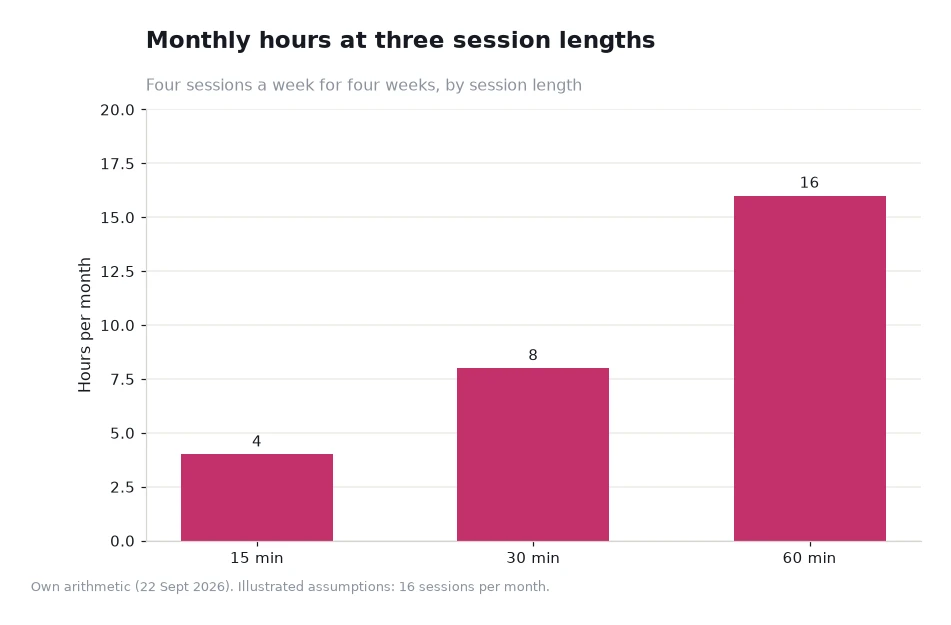
The first cost is time, and it is larger than it looks because setup is repeated. Sixteen sessions a month at 30 minutes is 8 hours; run the same habit on three services and the total is 24 hours, before counting the extra logins and the extra minutes spent remembering which character lives where. Nobody chooses 24 hours deliberately. It arrives through three separate decisions that each felt small.
The second cost is context. Characters on Crushon are described as recalling previous interactions, and that memory only helps a service you return to consistently. Split 16 sessions across three platforms and each one sees roughly five sessions a month, which is a thin signal compared with the 16 a single service would receive. The adaptation still happens; it just happens more slowly and with less to work from. On a Porn Chat AI service the continuity is the product, and continuity is precisely what fragmentation dilutes.
What consolidation preserves
A single service means one search vocabulary, one saved list, one place where you have already told the platform what you like. Those are unglamorous benefits that compound. Tag phrases learned on one catalogue work in the same catalogue next month; a saved list of 42 characters is a usable archive, while three lists of 14 are three things to keep track of and nothing more.
Consolidation also simplifies the questions you have to answer. With one account, the monthly review is a single pass: what did I use, what should I remove, is the recovery address still correct. With three, that review happens three times, and in practice it happens zero times, which is how a sprawling setup ends up containing accounts nobody remembers creating.
When keeping several is defensible
Sometimes the split is deliberate and worth the overhead. A second service can serve a genuinely different purpose, and a reader who keeps one account for a specific project and another for everyday use is making a coherent choice rather than accumulating by accident. The test is whether each service has a distinct job you can state in one sentence.
If the sentences start to sound identical, the split is costing you time for no return. The fix is not necessarily to delete anything immediately; it is to stop feeding the accounts you cannot describe. An account that receives no sessions will simply sit there, and the useful parts of it can be rebuilt in an afternoon on whichever service you actually use.
Two smaller costs are easy to overlook. Prompts and notifications arrive from every service you keep, so the pull to open one of them multiplies even when the hours do not. And search vocabulary resets with each catalogue, because a tag that returns useful results on one platform may return nothing on another, which gives every switch a short relearning period. Multiply that relearning by three services and the first ten minutes of each month go on remembering how each one is organised.
| Symptom | With one service | Figure |
|---|---|---|
| Monthly platform time | One habit instead of three parallel ones | 8 hours versus 24 at three services |
| Sessions per service | Full signal to the service you use | 16 versus roughly 5 each when split three ways |
| Saved lists | One archive rather than three fragments | 42 saves in six months versus three lists of about 14 |
| Credentials | One password and one recovery address | Three separate recovery paths to keep alive |
| Setup overhead | Paid once per session, not once per platform | 32 minutes a month at 2 minutes per session |
Worked example: one habit against three
Illustrative assumption: 16 sessions a month at 30 minutes each on a single service. That is 16 × 30 = 480 minutes, or 8 hours. Multiply across three services used at the same intensity and the total is 3 × 8 = 24 hours a month — 1,440 minutes spent on the same activity, spread across three catalogues that each see about a third of the input.
Compare the same 24 hours distributed differently. Keep the single-service 8 hours and spend the remaining 16 on something else entirely, and the platform time falls by two thirds while the per-service context roughly triples. At 2 minutes of setup per session, the single-service month also spends 32 minutes on framing rather than 96 spread across three logins. The trade is not about spending less effort; it is about sending that effort somewhere it accumulates.
Consolidating onto https://crushon.ai/ai-porn-chat
Consolidation works best as a migration rather than a purge. Rebuild the characters you actually revisit on the service you intend to keep, tagging each one the way you would search for it, and leave the abandoned accounts alone until their recovery details stop mattering. Nothing about that process requires deleting anything on day one, and an unhurried migration produces a library you recognise instead of a list you inherited.
Then set the terms of the single habit: how many sessions a week, how long each one runs, and when the library gets reviewed. The unlimited plan page is worth reading once if usage is going to grow, and a tag search is the fastest way to rebuild a shortlist from scratch. Readers who consolidate usually find the monthly review becomes something they actually do rather than something they keep postponing.
Frequently asked questions
Is one platform always better than several?
No. It is better when the accounts do the same job, because three parallel habits consume three times the hours and each service sees only a third of the input. Separate platforms remain sensible when each has a purpose you can state in a sentence.
What happens to a character library when I leave a service?
Saved lists do not transfer between platforms, which is the strongest practical argument for concentrating on one. Rebuilding a shortlist elsewhere takes an afternoon; recovering a collection of half-developed threads takes considerably longer.
How do I know whether my setup has sprawled?
Count the recovery emails for adult services in your inbox. More than one, with no clear reason for the second, is the usual sign, and the monthly hours tell you what the split is costing.
Audit the accounts once, then stop counting
List every adult AI account you can still log into, write one sentence for each about why it exists, and keep the ones with a clear answer. Move the characters worth keeping onto the service that survived the audit, set a session budget in minutes, and put the library review in a calendar. The entire exercise takes about an hour and removes a recurring source of low-level clutter.
Data and sources: the platform's AI porn chat page[1] for the description of how characters recall previous interactions, plus the plan and search pages, read 22 Sept 2026. Session counts, hour totals and library sizes are illustrative assumptions rather than platform data. Restricted to an adult readership of 18 plus.