The XPENG G6 stands apart in Australia by combining an 800V electrical platform, 5C LFP battery technology and unusually high DC charging rates with prices starting at $51,800 before on-road costs in 2026. The RWD Long Range offers 525 km WLTP range, 218 kW and 440 Nm, while accepting up to 451 kW DC charging and moving from 10% to 80% in about 12 minutes under suitable conditions. The AWD Performance raises output to 358 kW and 660 Nm, reaches 100 km/h in 4.13 seconds, and still provides 571 litres of boot space for normal five-seat use.
Australia gives electric SUVs a demanding mix of operating conditions. A vehicle can spend Monday in suburban traffic and Saturday covering several hundred kilometres between regional towns, so battery size alone says little about day-to-day usefulness. The 2026 G6 range approaches that problem with three different powertrain levels rather than one battery-and-motor combination stretched across every buyer.
The RWD Standard Range starts at $51,800 before on-road costs and uses a 68.5 kWh gross-capacity LFP battery. Output is 185 kW and 440 Nm, WLTP range is up to 480 km on 18-inch wheels, and DC charging can reach 382 kW. Moving to the $56,800 RWD Long Range raises battery capacity to 80.8 kWh, output to 218 kW and WLTP range to 525 km on the published Australian specification.
That extra $5,000 between the Standard Range and Long Range buys about 18% more gross battery capacity, a 33 kW increase in motor output and up to 45 km more official range when comparing the published maximum figures. Charging hardware also rises from 382 kW to 451 kW, so the more expensive version adds distance capability without accepting a slower battery refill.
XPENG Australia states that the Long Range can charge from 10% to 80% in approximately 12 minutes when battery temperature, charger output and other operating conditions allow it. A 451 kW peak is a vehicle capability, not a promise that every public charger will deliver 451 kW.
That distinction matters on Australian highways. A 150 kW public unit physically cannot supply the G6 at its maximum published rate, while a higher-output site gives the 800V architecture more room to work. Charging also slows as state of charge rises, which is why manufacturers normally quote rapid-charging time across the 10%-80% window rather than from empty to 100%.
XPENG pairs the high-voltage platform with LFP chemistry and a 5C battery design. LFP cells are widely used in modern EVs because of their thermal stability and cycle-life characteristics, while the 5C designation refers to the battery's ability to accept charging power at several times its rated capacity under the intended conditions. For the 80.8 kWh G6 pack, XPENG publishes a peak DC rate of 451 kW rather than treating 800V architecture as a marketing label without a corresponding charging figure.
Range figures also need context. The Long Range is rated at 17.9 kWh/100 km with 20-inch wheels on the Australian configurator, while its WLTP rating is 525 km. Real consumption can move above that figure at sustained motorway speeds, during heavy air-conditioning use, in poor weather or with a heavily loaded vehicle, so a 525 km laboratory rating should not be read as a guaranteed 525 km between every pair of charging stops.
The power figures become more interesting when price is considered. The 2026 AWD Performance costs $63,800 before on-road costs, only $7,000 above the Long Range, yet output rises from 218 kW to 358 kW and torque from 440 Nm to 660 Nm. Its claimed 0-100 km/h time falls from 6.7 seconds to 4.13 seconds, an improvement of roughly 38% in acceleration time.
| Australian G6 variant | Battery | Power / torque | WLTP range | Peak DC | 0-100 km/h | Price before on-roads |
|---|---|---|---|---|---|---|
| RWD Standard Range | 68.5 kWh | 185 kW / 440 Nm | Up to 480 km | 382 kW | 6.94 sec | $51,800 |
| RWD Long Range | 80.8 kWh | 218 kW / 440 Nm | 525 km | 451 kW | 6.7 sec | $56,800 |
| AWD Performance | 80.8 kWh | 358 kW / 660 Nm | Performance-focused | 451 kW | 4.13 sec | $63,800 |
Performance does not remove the usual SUV requirements. The G6 is about 4.75 metres long and 1.92 metres wide, seats five people and provides 571 litres of luggage capacity behind the second row. Folding the rear seats expands that figure to 1,374 litres, a gain of about 141%, which matters more to family use than a small change in touchscreen size or decorative trim.
The Long Range has a listed kerb weight of 2,115 kg, a gross vehicle mass of 2,590 kg and a 475 kg payload. A 5.8-metre turning radius makes the dimensions more manageable in urban parking areas, while front double-wishbone suspension and a five-link independent rear layout are more sophisticated than the simpler rear arrangements still found on some lower-priced SUVs.
Aerodynamic work also contributes to energy use. XPENG lists a drag coefficient of 0.248 Cd for the G6, low for a high-bodied family vehicle. Aerodynamic resistance becomes increasingly important as speed rises, so body shape, underbody management and frontal area have a larger effect during open-road travel than they do in low-speed suburban traffic.
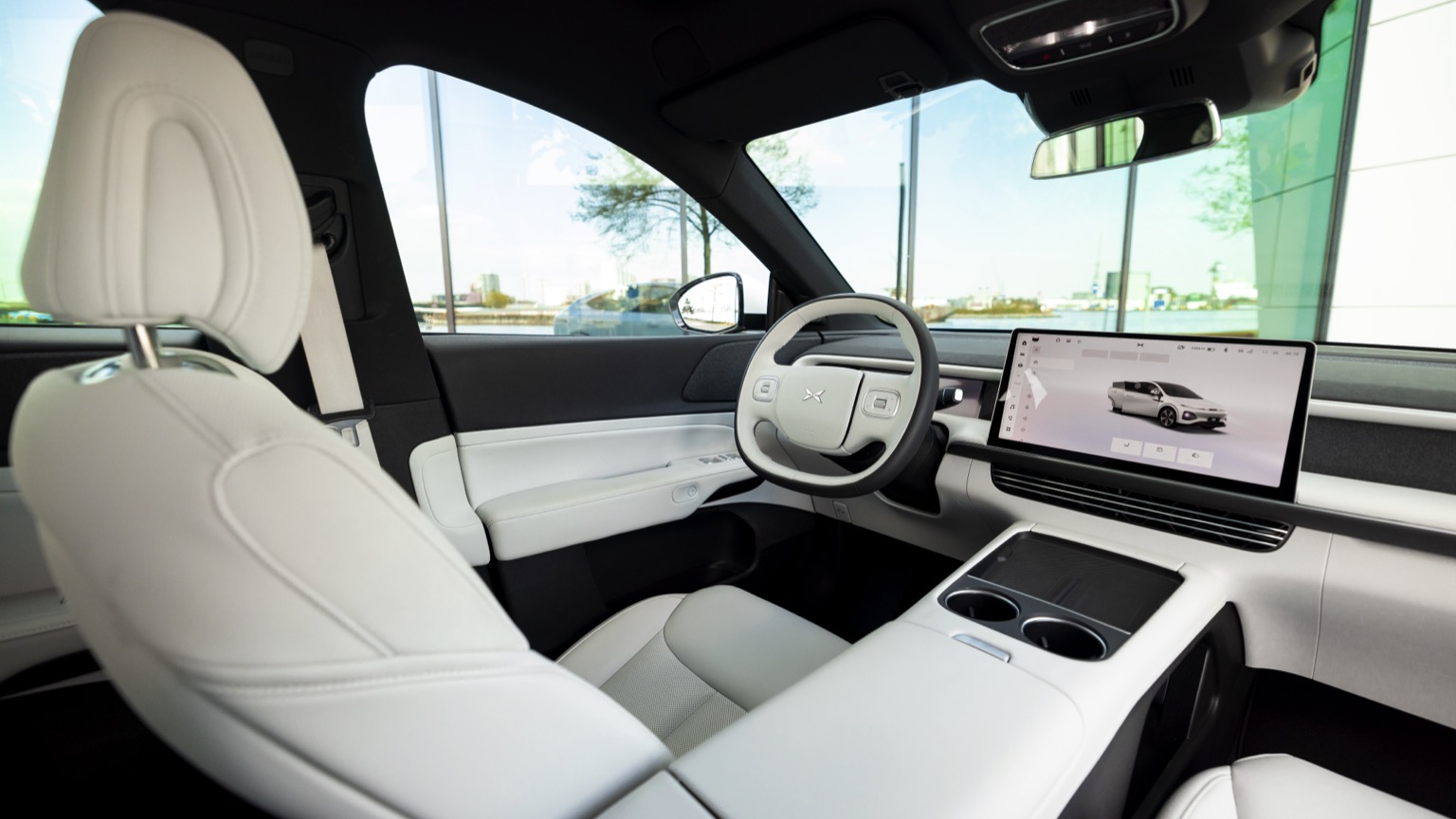
People comparing suv cars australia are also likely to notice how much equipment is included without moving into a luxury-brand price band. The G6 uses a 10.25-inch driver display and a 15.6-inch central screen, supports Apple CarPlay and Android Auto, and includes over-the-air software updating through its connected vehicle platform in 2026.
Physical access is similarly digital. Depending on specification, owners can use Bluetooth phone-key functions, UWB-based access and an NFC card. The vehicle also offers the “Hey XPENG” voice interface, while the owner app can handle several remote vehicle functions. OTA support lets software features and system behaviour be revised after registration rather than remaining fixed at the version installed on delivery day.
Driver assistance covers more than adaptive cruise control. XPILOT Assist includes functions such as lane centring, forward collision warning, automatic emergency braking, blind-spot detection, rear cross-traffic alert, lane-related assistance and driver-state monitoring. The G6 also carries seven airbags on the Australian specification, while XPENG clearly states that assistance systems still require driver supervision in traffic, poor visibility and difficult road conditions.
Parking receives similar attention because a 1.92-metre-wide SUV can feel large in older city car parks. Surround-view cameras, automatic parking functions and related low-speed assistance reduce reliance on the rear camera alone. No electronic parking function changes the vehicle's physical width, so buyers with narrow home garages should still measure the available opening before ordering a 2026 model.
Energy can also leave the battery through the vehicle-to-load system rather than only entering through the charging port. The Long Range specification lists V2L output of up to 6 kW, enough for compatible camping appliances, tools and other external electrical equipment within system limits. For owners who spend weekends away from mains electricity, that function gives the traction battery a practical use while the vehicle is parked.
Ownership support deserves the same attention as acceleration because XPENG is still building its Australian footprint. Vehicles covered by the current 2026 Australian program receive a 7-year/unlimited-kilometre whole-vehicle warranty for eligible private use, while commercial use is covered for seven years or 160,000 km, subject to the published warranty conditions.
The traction battery, Battery Management System, electric motor and Intelligent Power Unit are covered for eight years or 160,000 km. Paint coverage is five years, anti-corrosion coverage runs for seven years, and XPENG Australia states that roadside assistance is supplied for seven years from first registration. Scheduled servicing is required every 12 months or 20,000 km, whichever comes first.
Service access is gradually becoming less dependent on a small number of metropolitan locations. In July 2026, XPENG ANZ said its expansion plan included up to 50 Australian sales outlets and three flagship technology experience centres, with a target of placing most customers within about a 40-minute trip of a showroom. A genuine-parts warehouse was also operating in Melbourne by that stage.
Those network figures are particularly relevant for regional owners. A 12-minute 10%-80% charging claim is useful during a road trip, but vehicle ownership also includes tyre work, accident repairs, scheduled service, software support and replacement parts. Buyers outside major capitals should check the distance to an authorised service point alongside the distance to high-output CCS2 charging stations.
The charging connector is CCS2, the common DC fast-charging standard used across much of Australia's public EV network, while AC charging is rated at 11 kW. XPENG lists a 5%-100% AC charging time of about 9.2 hours for the Long Range, so a suitable three-phase home installation can replenish a large proportion of the 80.8 kWh battery overnight rather than relying on public rapid charging for routine use.
Running-cost comparisons should therefore start with where the car will receive most of its electricity. A household charging mainly at home can experience a very different cost per 100 km from an owner relying heavily on commercial fast chargers. At the official 17.9 kWh/100 km consumption figure, every 10 cents per kWh change in electricity price alters theoretical energy cost by about $1.79 per 100 km before charging losses.
Wheel choice can change efficiency as well. XPENG publishes up to 480 km WLTP for the Standard Range on 18-inch wheels and 470 km on the 20-inch configuration, a difference of about 2.1%. Larger wheels may change appearance and handling feel, but the published figures show why tyre size belongs in a range comparison rather than being treated only as styling.
For a buyer covering 20,000 km per year—the same distance used in XPENG's service interval—the Long Range's official 17.9 kWh/100 km figure corresponds to roughly 3,580 kWh of traction energy before charging losses. Actual annual use will vary with motorway share, temperature, tyre pressure, passenger load and cabin climate settings, so an owner with a long daily highway commute should compare personal travel patterns with a test-drive consumption reading rather than relying on the WLTP number alone.
The G6 therefore sits in an unusual part of the 2026 Australian market: $51,800-$63,800 before on-road costs covers a range from a 185 kW rear-wheel-drive model to a 358 kW all-wheel-drive version, while the upper two variants support 451 kW peak DC charging. For shoppers comparing price, range, charging access, boot volume, warranty length and service distance on the same page, those figures give far more useful information than a broad “premium electric SUV” label.